...

what is devops

What is devops

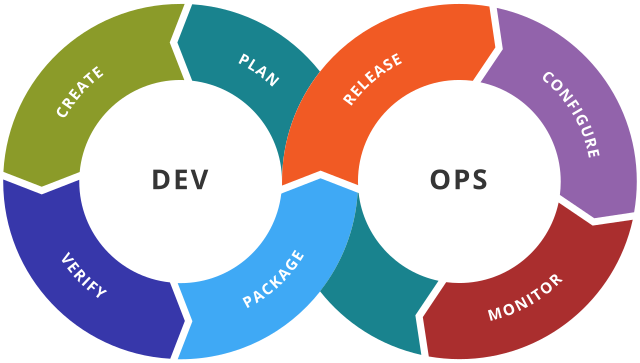
DevOps is a set of practices, principles, and cultural philosophies aimed at improving collaboration, communication, and integration between software development (Dev) and IT operations (Ops) teams within an organization. The primary goal of DevOps is to streamline the software delivery process, enabling organizations to deliver high-quality software more rapidly, reliably, and efficiently.
what is devops
source: Wikipedia

It seems like you’re referring to “DevOps,” which is a term that combines “development” and “operations.” DevOps is a set of practices, principles, and cultural philosophies aimed at improving collaboration, communication, and integration between software development (Dev) and IT operations (Ops) teams within an organization. The primary goal of DevOps is to streamline the software delivery process, enabling organizations to deliver high-quality software more rapidly, reliably, and efficiently.

Here are some key characteristics and principles of DevOps:

  1. Automation: DevOps emphasizes the automation of manual processes throughout the software development lifecycle (SDLC), including code deployment, testing, configuration management, and infrastructure provisioning. Automation reduces human error, accelerates delivery, and improves consistency.
  2. Continuous Integration (CI) and Continuous Delivery (CD): CI/CD practices involve frequently integrating code changes into a shared repository (CI) and automatically deploying applications to production environments (CD). This approach allows teams to detect and address issues early, release software more frequently, and deliver value to users quickly and consistently.
  3. Collaboration and Communication: DevOps encourages collaboration and communication between development, operations, and other stakeholders involved in the software delivery process. Cross-functional teams work together to align priorities, share knowledge, and address challenges effectively.
  4. Infrastructure as Code (IaC): IaC is a DevOps practice that involves managing and provisioning infrastructure resources through code and automation tools. By treating infrastructure as code, organizations can achieve greater scalability, consistency, and reproducibility, enabling faster and more reliable deployments.
  5. Monitoring and Feedback: DevOps emphasizes the importance of monitoring application performance, infrastructure metrics, and user feedback to continuously improve processes and outcomes. Monitoring tools provide real-time insights into system health, allowing teams to identify issues, optimize performance, and enhance the user experience.
  6. Culture of Continuous Improvement: DevOps fosters a culture of continuous improvement, where teams embrace experimentation, learning, and adaptation. By regularly reflecting on processes, identifying areas for enhancement, and implementing iterative changes, organizations can drive innovation and increase agility.
  7. Security: DevOps integrates security practices throughout the software delivery pipeline, known as DevSecOps. Security considerations are incorporated early in the development process, with automated security testing, vulnerability scanning, and compliance checks to mitigate risks and ensure the security of applications and infrastructure.
  8. Scalability and Resilience: DevOps principles promote scalability and resilience by designing systems that can handle fluctuating workloads, recover quickly from failures, and adapt to changing requirements. Automated scaling, fault tolerance, and disaster recovery strategies are essential components of DevOps architecture.

What is devops
source: axelerant

By embracing DevOps principles and practices, organizations can accelerate innovation, enhance competitiveness, and deliver value to customers more effectively in today’s fast-paced digital landscape.


Leave a Reply

Your email address will not be published. Required fields are marked *

Trending

AI for Business Growth:5 Ways to Save Time & Boost Revenue

Learn how to leverage AI for business growth to save time, boost revenue, and improve efficiency with 5 practical strategies. How to Leverage AI for Business Growth (5 Ways to Save Time & Boost Revenue) In today’s fast-paced market, AI for Business Growth isn’t just a trend it’s a practical way to move faster, work smarter, and increase revenue without constantly expanding your team. The real advantage for business leaders is not simply using AI, but using it as a lever to improve efficiency, strengthen decisions, and drive performance. Below are 5 proven ways to integrate AI into your operations effectively. 1. Eliminate Time-Consuming Repetitive Tasks One of the most immediate benefits of AI is its ability to handle grunt work. By automating administrative tasks, you free up your mental energy for high-level strategy, or you free your team so that they can  focus on strategy and execution. 2. Supercharge Marketing and Sales Performance AI helps teams compete at a higher level by enabling personalization and speed without increasing headcount. What AI can improve? Campaign speed: Build content calendars and campaign variations quickly Copywriting: Create multiple ad and landing page variations to identify what converts Lead intelligence: Analyze customer behavior to prioritize leads likely to close 3. Revolutionize Your Customer Support Customers increasingly expect fast responses. AI tools help you meet that demand without hiring a 24/7 call center. Key benefits such as Agent assistance: Suggest real-time replies to support agents to ensure brand consistency. Instant resolutions: Chatbots handle FAQs and common issues immediately Make Data-Driven Decisions with Confidence You don’t need to be a data scientist to understand what’s happening in your business. AI can act as your personal analyst, sifting through spreadsheets to find the why behind your numbers. We have Common wins such as: Trend spotting: Identify changes in sales, web behavior, and customer engagement Forecasting: Predict demand and clarify what’s driving performance 4. Optimize Operations and Productivity Scaling a business requires systems. AI can help you build repeatable processes, automate workflows, and reduce operational friction. Workflow Automation: Set up triggers for report generation and internal team updates. Inventory Logic: Assist with inventory planning and supply chain ideas based on historical data. 5. Gain a Competitive Advantage Through Execution In business, the faster you can test an idea, the faster you can profit. AI facilitates rapid iteration. Test different headlines and offers simultaneously.  By executing faster, you learn what the market wants months ahead of your competitors. In Conclusion,  Use AI as a Growth Engine not a Hobby   Share the post “AI for Business Growth:5 Ways to Save Time & Boost Revenue” FacebookBlueskyShare…

Read More »
Generative AI and Agentic AI
Trending

Generative AI and Agentic AI in Business Transformation

Generative AI and Agentic AI represent two powerful stages in artificial intelligence development.    Generative AI and Agentic AI Generative AI and Agentic AI represent two powerful stages in artificial intelligence development. Generative AI Is Specializes in creativity , it analyzes enormous volumes of data to produce new content such as text, images, or sound. It’s responsive: waiting for a human command and replying with a tailored result. Agentic AI, on the other hand, acts independently. It can plan actions, make decisions, and complete multi-step goals using tools, data, and even other AI agents. While humans remain in control, Agentic AI introduces proactive intelligence not just responding to prompts, but initiating actions to reach defined objectives. Generative AI vs Agentic AI in Business Transformation In today’s businesses, Generative AI boosts productivity, helping employees accomplish tasks faster. But Agentic AI transforms processes  automating workflows, resolving customer queries, and optimizing operations across industries like banking, retail, and manufacturing. As organizations integrate Generative and Agentic AI, they move beyond efficiency toward intelligent automation where AI doesn’t just work faster, it works smarter. Share the post “Generative AI and Agentic AI in Business Transformation” FacebookBlueskyShare…

Read More »
Artificial Intelligence(AI) in Everyday Life
Trending

Artificial Intelligence (AI) one of the most talked-about technologies today

Artificial Intelligence (AI) is a branch of computer science that focuses on building systems capable of performing tasks that usually require human intelligence. These tasks include recognizing speech, understanding language, making decisions, identifying images, and even playing games. Artificial Intelligence(AI) in Everyday Life AI is already used in many day-to-day technologies. Common examples include: Smart home devices such as smart lights and home automation tools Virtual assistants like Siri and Alexa that help with searching, reminders, and device control Recommendation systems used by, Amazon ,YouTube, and Netflix to suggests content and products based on behavior Fraud detection in banking systems which help to detects suspicious transactions to protect customers Do you know about Generative Artificial Intelligence ? Is a subset of deep learning that focuses on creating new content such as text, images, and videos instead of only analyzing existing data. Some examples include: ChatGPT: generates text for Q&A, summaries, and writing assistance Deepfake technology: can create or change video content using AI methods Midjourney / DALL·E: generate images from prompts Generative Artificial Intelligence uses  Writing assistance (drafts, edits, summaries) Brainstorming and content planning Video ideas/storyboards Image creation for design and marketing Share the post “Artificial Intelligence (AI) one of the most talked-about technologies today” FacebookBlueskyShare…

Read More »
Seraphinite AcceleratorOptimized by Seraphinite Accelerator
Turns on site high speed to be attractive for people and search engines.