...

ai tools for small business

How Using ai tools for small business Can Transform Your Company in 2025

Welcome to the age of technology!Ai tools for small business  and in general AI tools have propelled the digital age forward, and for small businesses, the implementation of ai tools for small business is a non negotiable when compared to the countless benefits it has to offer. AI is the core of modern day business automation, and the tools created using AI aims to streamline the operations of a business, cut down the costs, and immensely increase the productivity of the company. Gearing up to the era of starting a business, it is relatively easier for small businesses to become AI empowered.

Why ai tools for small business and how its important

In the past, small businesses had a notoriously hard time trying to keep up with larger businesses, because of their limited infrastructure. But with the overuse of AI tools, operations have massively streamlined their functions. AI is rapidly changing and a treat to small businesses. With the right implementation of ai tools for small business, small businesses can enable the automation of day to day business operations, initiate self service portals, and generate reports with deep level analysis for informed decision making.

Top 5 Benefits of ai tools for small business

  1. Improved Productivity: AI Tools streamline routine tasks such as scheduling, sending invoices, and following up with customers, freeing up your time.
  2. Reduced Costs: AI’s efficiency with routine tasks leads to lower operational costs and a decreased necessity for new hires.
  3. Enhanced Customer Experience: Customer service chatbots improve customer experience and retention as they provide instant support 24/7.
  4. Decisions Based on Data: AI tools provide actionable insights into sales and customer data, analyzing data capturing sales and behavioral trends, making strategies to help the business.
  5. Automation of Marketing: AI tools enhance your marketing efforts by automating the scheduling of social media posts and sending out targeted email campaigns.
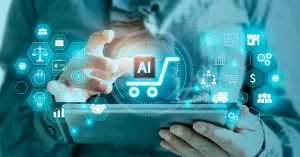
ai tools for small business​
img source Dynamic Edge

Embracing Emerging Tools of Artificial Intelligence Technology for Small Businesses in 2025

  1. Chatbots (Tidio or Chatgpt for instance): for immediate interaction to the clients questions on the business website or social media platforms.
  2. AI Accounting Software (Xero or QuickBooks): for automating invoicing, monitoring of expenses, and the generation of financial statements.
  3. AI-Powered Design (Looka and Canva): for the generation of beautiful and eye-catching graphics, marketing materials and logos within a short time.
  4. CRM Automation. (Hubspot and Zoho): for effective execution and management of sales,lead tracking, sales monitoring, and automating of follow ups.
  5. Content Creation (Jasper and Copy.ai): for writing of effective blogs, social media captions, and product marketing texts.

How to Start Using AI Tools in Small Business

  1. Identify Your Business​​ Needs​: Begin with the processes that are the most time-consuming for your business, for example, customer support, bookkeeping, or advertising.
  2. Find the Most Relevant AI Tools: With your business in mind, use several comparative AI tools and reviews to settle on the best price and feature match.
  3. Integrate and Start Automating: Begin with the tools and processes that most need automation. Begin with your most routine to your most complex business functions towards efficiency.
  4. Track and Adjust: Performance should be tracked and measures adjusted to increase responsiveness to the business real time metrics.

To remain competitive and foster efficiency in 2025 and beyond, Harnessing AI tools for small business is the most effective means for promoting growth. Embrace the power of artificial intelligence today and don’t allow your business to be left behind.


 

Leave a Reply

Your email address will not be published. Required fields are marked *

Technology

Cybersecurity Innovations

Understanding the Landscape of Cybersecurity In today’s digital era, cybersecurity has become more critical than ever, with organizations facing an increasing number of sophisticated cyber threats that can disrupt operations, compromise sensitive information, and severely damage reputations. Cyber attackers are constantly evolving their tactics, leading to more complex threats like ransomware, pervasive phishing schemes, and highly coordinated Advanced Persistent Threats (APTs). These attacks target individuals and organizations of any size, making robust and proactive cybersecurity measures imperative especially given the significant increase in attacks witnessed in recent years that exploit vulnerabilities in remote work setups and unsecured devices. What is really Cybersecurity? Refers to the protection of computer systems, networks, and data from theft, damage, or unauthorized access. It is the practice of defending against malicious attacks that target sensitive information. Think of it as the digital equivalent of a high-tech security system for your home, constantly guarding your most valuable possessions (your data) from various threats. As our lives become increasingly digital, the need for effective cybersecurity has never been greater, affecting individuals, businesses, and governments alike. The Key Pillars of Cybersecurity Cybersecurity isn’t a single solution; it’s a layered defense mechanism composed of several specialized areas. Understanding these different types helps us grasp the full scope of digital protection. Network Security Focus: Protecting the integrity, usability, and safety of the network infrastructure itself. What it does: It secures all the connections and conduits through which data travels, using tools like firewalls and Intrusion Prevention Systems (IPS) to block unauthorized traffic and attacks at the network entry points. Application Security Focus: Keeping software and devices free of threats by securing them from the design phase onward. What it does: It involves adding security features within the application code and architecture to prevent attacks like SQL injection and Cross-Site Scripting (XSS). This ensures that the applications you use daily don’t become the weakest link in your defense. Information Security (InfoSec) Focus: Safeguarding data both in storage and in transit from unauthorized access, use, disclosure, disruption, modification, or destruction. What it does: InfoSec is often defined by the CIA Triad:             . Confidentiality: Keeping information secret (e.g., using encryption).             Integrity: Ensuring data is accurate and hasn’t been tampered with.            Availability: Making sure authorized users can access the information when needed. Cloud Security Focus: Protecting data, applications, and infrastructure that reside in the cloud (services like AWS, Azure, Google Cloud). What it does: It manages security across distributed environments, often involving shared responsibility between the cloud provider and the customer. This is crucial as more businesses migrate their operations off-premise. Endpoint Security Focus: Securing individual computing devices or endpoints, like laptops, desktop PCs, mobile phones, and tablets that connect to the network. What it does: These devices are the primary points of user interaction and are often the targets of attack. Endpoint security uses technologies like antivirus/anti-malware software and Endpoint Detection and Response (EDR) tools to monitor and protect these physical access points.     Share the post “Cybersecurity Innovations” FacebookXShare…

Read More »
Smart H
Best Website designer in buea cameroon

Smart Home Technology and IoT Devices: Embracing the future

Smart Home Technology and IoT Devices: Embracing the Future As we delve into the world of smart home technology and IoT devices, we find ourselves at the forefront of an exciting transformation. These innovations are not just futuristic concepts; they promise to enhance our daily lives with greater convenience, improved security, and sustainable living options. While challenges do exist, the benefits of integrating smart home technology are compelling and undeniable. Join us as we explore how you can make your home smarter and embrace the comforts of this new era. What’s New in Smart Home Technology? Increased Interconnectivity Among Devices One of the most significant advancements in smart home technology is the ability of devices to communicate seamlessly. Thanks to standards like Matter, devices from various manufacturers can work together. This interconnectivity allows for a cohesive ecosystem where everything from your smart thermostat to your coffee maker can be controlled with a single command. AI Integration in Home Automation Artificial intelligence (AI) is becoming a crucial element in smart homes. AI is not just a feature but a fundamental part of home automation. For instance, smart thermostats will learn your schedule and adjust temperatures accordingly, making your home more efficient and comfortable. Enhanced Home Security Systems With the rise of smart home devices, home security is more advanced than ever. AI-driven cameras and smart locks can recognize familiar faces and alert homeowners to unusual activities. These features provide peace of mind and enhance the overall safety of your home. Image Source: Pexels.com Focus on Energy Efficiency Sustainability is increasingly important, and smart home technology is stepping up to help. Devices that monitor energy use can help you save on utility bills while reducing your carbon footprint. Imagine receiving real-time data on how much energy your appliances consume, allowing for smarter decisions. Voice and Gesture Control Voice-activated technology is becoming the norm in smart homes. Whether you want to dim the lights or play music, you can do it hands-free. Gesture control is also emerging, making interactions with your devices even more intuitive and natural. Why Choose Smart Home Devices?  Health Monitoring Capabilities Smart home technology is increasingly integrated with health-monitoring devices. Wearables can track your health metrics and sync with your home systems to create an environment conducive to well-being, like optimizing air quality and lighting.  Convenience and Automation Smart home devices streamline various tasks, making life easier. From scheduling your coffee maker to turn on in the morning to having your lights adjust automatically, these innovations save time and enhance daily routines.  Improved Home Security With smart security systems, you can monitor your home from anywhere using your smartphone. Whether you’re at work or on vacation, you can check in and ensure everything is secure, providing an extra layer of protection.  Cost Efficiency Over Time While the initial investment in smart home devices may be significant, the long-term savings can be substantial. Energy-efficient appliances can lower your utility bills, and smart sensors help prevent costly issues with proactive alerts. Challenges to Consider Interoperability Issues Despite advancements, some devices may face compatibility challenges, leading to a fragmented experience. Ensuring your devices can work together smoothly is essential for a fully integrated smart home. Dependence on Internet Connectivity Smart devices heavily rely on stable internet connections. If your internet goes down, so does the functionality of your smart home. Future designs will need to consider offline capabilities to maintain usability during outages. Adopting smart home technology and IoT devices significantly enhances your living environment. These advancements offer improved convenience, security, and sustainability for modern lifestyles. Share the post “Smart Home Technology and IoT Devices: Embracing the future” FacebookXShare…

Read More »
Genie3
Technology

Genie3: Unleashing the Power of Artificial Intelligence

Genie3: Unleashing the Power of Artificial Intelligence Artificial Intelligence (AI) has reached new heights with the introduction of Genie 3, the latest innovation in AI technology. Developed by a team of leading researchers and engineers, Genie 3 promises to revolutionize the way we interact with AI systems. Last year after  introduced the first foundation world models with Genie1 and Genie2 , which could generate new environments for agents. DeepMinds continued to push the state of the art in video generation with Their models Veo 2 and Veo 3, which exhibit a deep understanding of intuitive physics. Each of these models marks progress along different capabilities of world simulation. Genie 3 their first world model to allow interaction in real-time, while also improving consistency and realism compared to Genie 2. What is Genie3? Genie3 is an advanced AI world model developed by DeepMind, designed to generate interactive and playable environments based on text prompts. Building on its predecessors, Genie 1 and Genie 2, which laid the groundwork for creating new environments for agents, Genie 3 represents a significant leap forward in the realm of interactive simulations. Notable Features of Genie3 Genie 3 includes several standout features that differentiate it from both previous AI models and its earlier iterations. Below are its key capabilities: High-Definition Graphics at 720p and 24 FPS In contrast to earlier versions that often produced low-resolution and grainy visuals, Genie 3 offers sharp 720p graphics rendered at a smooth 24 frames per second. This improvement results in more visually appealing and immersive environments. Interactive Real-Time Experience A major advancement of Genie 3 is its ability to facilitate real-time interaction. Users are not limited to merely observing generated scenes; they can navigate through the environment, interact with objects, and see immediate responses. This makes it particularly suitable for gaming prototypes, training scenarios, and interactive narrative applications. Prompt-Based Environment Generation Users can input a prompt, prompting Genie 3 to create a fully interactive and explorable world. This could be anything from a cutting-edge laboratory to the terrain of an extraterrestrial planet. The AI logically adds details, ensuring the generated environment feels cohesive and believable. Temporary Memory Functionality The AI in Genie 3 can retain information about events for around one minute, allowing for consistent interaction sequences. For example, if an object is moved or a character is altered, the system remembers these changes and incorporates them into future interactions.   Share the post “Genie3: Unleashing the Power of Artificial Intelligence” FacebookXShare…

Read More »
Seraphinite AcceleratorOptimized by Seraphinite Accelerator
Turns on site high speed to be attractive for people and search engines.