...

E-Learning Evolution in Cameroon

E-Learning Evolution in Cameroon

E-learning in Cameroon has undergone significant transformation over the past decade, driven by advancements in technology, increased internet accessibility, and the growing demand for flexible learning options. Initially, e-learning was limited to urban areas with access to reliable internet, but it has since expanded to more regions as infrastructure improves.

Early Stages of E-Learning
In the early 2010s, e-learning in Cameroon was still in its infancy, largely centered around higher education institutions in major cities like Yaoundé and Douala. The adoption of online learning platforms was slow due to challenges such as limited internet access, high data costs, and a lack of digital literacy among the population. Educational content was often delivered through CD-ROMs or offline platforms that required minimal internet usage.

Growth and Expansion
With the proliferation of smartphones and cheaper internet, especially following the introduction of 3G and 4G networks, the reach of e-learning platforms has broadened. Universities and private institutions began offering online courses, and international e-learning platforms like Coursera and Udemy started gaining traction. The COVID-19 pandemic accelerated this shift, as educational institutions were forced to adopt online learning solutions almost overnight to continue their activities during lockdowns.
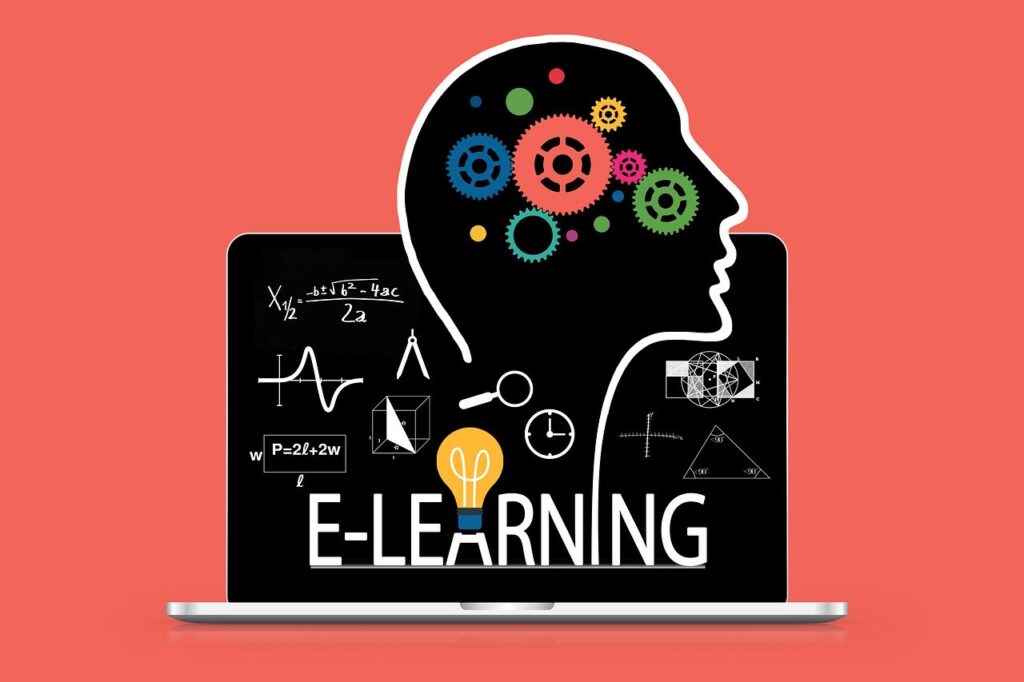
E-Learning

Government and Institutional Support
The Cameroonian government and international organizations have played a crucial role in fostering the growth of e-learning. Initiatives like the “Digital Economy Plan” aim to increase digital literacy and improve infrastructure, making e-learning more accessible to students across the country. Additionally, the Ministry of Higher Education has encouraged the integration of digital tools in the curriculum, recognizing the importance of e-learning in modern education.

E-Learning

Current Trends and Future Outlook
Today, e-learning in Cameroon is characterized by a diverse array of platforms and content providers. From basic digital literacy programs to specialized courses in fields like technology and healthcare, the range of available educational resources has expanded significantly. Mobile learning, or m-learning, is particularly popular due to the high penetration of smartphones. Additionally, local startups are emerging to meet the specific needs of the Cameroonian market, offering courses in both French and English to cater to the bilingual population.

The future of e-learning in Cameroon looks promising as technology continues to evolve. Virtual classrooms, AI-driven personalized learning, and expanded access to high-speed internet are expected to further enhance the quality and accessibility of education. As more students and professionals embrace online learning, e-learning is set to become an integral part of the education landscape in Cameroon.

E-learning in Cameroon has evolved from a nascent concept into a vital component of the educational system, with ongoing developments promising to make education more inclusive and adaptable to the needs of the 21st century.


Leave a Reply

Your email address will not be published. Required fields are marked *

Trending

AI for Business Growth:5 Ways to Save Time & Boost Revenue

Learn how to leverage AI for business growth to save time, boost revenue, and improve efficiency with 5 practical strategies. How to Leverage AI for Business Growth (5 Ways to Save Time & Boost Revenue) In today’s fast-paced market, AI for Business Growth isn’t just a trend it’s a practical way to move faster, work smarter, and increase revenue without constantly expanding your team. The real advantage for business leaders is not simply using AI, but using it as a lever to improve efficiency, strengthen decisions, and drive performance. Below are 5 proven ways to integrate AI into your operations effectively. 1. Eliminate Time-Consuming Repetitive Tasks One of the most immediate benefits of AI is its ability to handle grunt work. By automating administrative tasks, you free up your mental energy for high-level strategy, or you free your team so that they can  focus on strategy and execution. 2. Supercharge Marketing and Sales Performance AI helps teams compete at a higher level by enabling personalization and speed without increasing headcount. What AI can improve? Campaign speed: Build content calendars and campaign variations quickly Copywriting: Create multiple ad and landing page variations to identify what converts Lead intelligence: Analyze customer behavior to prioritize leads likely to close 3. Revolutionize Your Customer Support Customers increasingly expect fast responses. AI tools help you meet that demand without hiring a 24/7 call center. Key benefits such as Agent assistance: Suggest real-time replies to support agents to ensure brand consistency. Instant resolutions: Chatbots handle FAQs and common issues immediately Make Data-Driven Decisions with Confidence You don’t need to be a data scientist to understand what’s happening in your business. AI can act as your personal analyst, sifting through spreadsheets to find the why behind your numbers. We have Common wins such as: Trend spotting: Identify changes in sales, web behavior, and customer engagement Forecasting: Predict demand and clarify what’s driving performance 4. Optimize Operations and Productivity Scaling a business requires systems. AI can help you build repeatable processes, automate workflows, and reduce operational friction. Workflow Automation: Set up triggers for report generation and internal team updates. Inventory Logic: Assist with inventory planning and supply chain ideas based on historical data. 5. Gain a Competitive Advantage Through Execution In business, the faster you can test an idea, the faster you can profit. AI facilitates rapid iteration. Test different headlines and offers simultaneously.  By executing faster, you learn what the market wants months ahead of your competitors. In Conclusion,  Use AI as a Growth Engine not a Hobby   Share the post “AI for Business Growth:5 Ways to Save Time & Boost Revenue” FacebookBlueskyShare…

Read More »
Generative AI and Agentic AI
Trending

Generative AI and Agentic AI in Business Transformation

Generative AI and Agentic AI represent two powerful stages in artificial intelligence development.    Generative AI and Agentic AI Generative AI and Agentic AI represent two powerful stages in artificial intelligence development. Generative AI Is Specializes in creativity , it analyzes enormous volumes of data to produce new content such as text, images, or sound. It’s responsive: waiting for a human command and replying with a tailored result. Agentic AI, on the other hand, acts independently. It can plan actions, make decisions, and complete multi-step goals using tools, data, and even other AI agents. While humans remain in control, Agentic AI introduces proactive intelligence not just responding to prompts, but initiating actions to reach defined objectives. Generative AI vs Agentic AI in Business Transformation In today’s businesses, Generative AI boosts productivity, helping employees accomplish tasks faster. But Agentic AI transforms processes  automating workflows, resolving customer queries, and optimizing operations across industries like banking, retail, and manufacturing. As organizations integrate Generative and Agentic AI, they move beyond efficiency toward intelligent automation where AI doesn’t just work faster, it works smarter. Share the post “Generative AI and Agentic AI in Business Transformation” FacebookBlueskyShare…

Read More »
Artificial Intelligence(AI) in Everyday Life
Trending

Artificial Intelligence (AI) one of the most talked-about technologies today

Artificial Intelligence (AI) is a branch of computer science that focuses on building systems capable of performing tasks that usually require human intelligence. These tasks include recognizing speech, understanding language, making decisions, identifying images, and even playing games. Artificial Intelligence(AI) in Everyday Life AI is already used in many day-to-day technologies. Common examples include: Smart home devices such as smart lights and home automation tools Virtual assistants like Siri and Alexa that help with searching, reminders, and device control Recommendation systems used by, Amazon ,YouTube, and Netflix to suggests content and products based on behavior Fraud detection in banking systems which help to detects suspicious transactions to protect customers Do you know about Generative Artificial Intelligence ? Is a subset of deep learning that focuses on creating new content such as text, images, and videos instead of only analyzing existing data. Some examples include: ChatGPT: generates text for Q&A, summaries, and writing assistance Deepfake technology: can create or change video content using AI methods Midjourney / DALL·E: generate images from prompts Generative Artificial Intelligence uses  Writing assistance (drafts, edits, summaries) Brainstorming and content planning Video ideas/storyboards Image creation for design and marketing Share the post “Artificial Intelligence (AI) one of the most talked-about technologies today” FacebookBlueskyShare…

Read More »
Seraphinite AcceleratorOptimized by Seraphinite Accelerator
Turns on site high speed to be attractive for people and search engines.