...

How To Become a Graphic Designer

Step by step guide on how to become a graphic designer

For you to know how to become a graphic designer, you must be ready to be as patient as possible because creative works such as graphic designing entails a lot of patience. Below are the steps to follow

Learn Graphic Design Principles

You must first have a firm grasp of graphic design principles in order to work as a graphic designer. Well-made design is meticulously created. It calls for extensive planning as well as proficiency in the application of design theory and principles. The elements of lines, color, shape, space, texture, typography, scale, dominance and emphasis, and harmony are all important considerations for graphic designers. These components all affect a design and have the power to influence audience perception.

Learn Key Graphic Design Tools

A wide range of tools are used by graphic designers. They use graphic design software the most often. For most Graphic Designers, the industry standard is Adobe Creative Cloud. Since most design work can be created with Adobe PhotoShop, Illustrator, and InDesign, you should familiarize yourself with these programs. Training materials and user manuals abound and are easily accessible. You might want to look through Adobe’s tutorial series to get started.

Take Up Personal Projects to Improve Your Graphic Design Abilities

It’s time to put your newfound understanding of graphic design principles and tools into practice. Working on your own design projects is the best way to develop your abilities and become an expert with graphic design software. You can start by making mockups of logos and advertisements for actual or fictional businesses. Another option is to try redesigning an organization’s current designs; this is an excellent way to determine and cater to target markets. Offering your time to nearby nonprofits or companies is an additional choice. Provide your design expertise to these organizations to increase your practice and obtain practical experience.

Create a Portfolio to Display Your Graphic Design Talents

For any Graphic Designer, having a strong portfolio is imperative. You can include assignments from a course, personal projects, and professional projects in your portfolio. Prioritize quality over quantity. Since your portfolio serves as a prospective employer’s or client’s first impression, choose pieces that highlight your interests and design prowess.
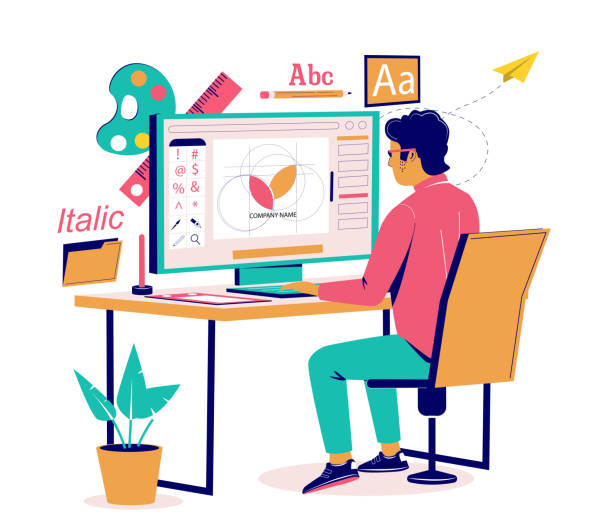
how to become a graphic designer
Graphic designer creating logo design using computer software sitting at desk, vector flat isometric illustration. Workspace of digital artist, illustrator, graphic design creative professional.

Another process on How To Become a Graphic Designer: Step-by-Step

It’s crucial to first comprehend what a graphic design job would entail if you’re interested in learning how to become one. The art of telling a story through visual communication is called graphic design. Make use of text, graphics, and images to establish your brand and draw in your intended audience. You can work in a wide range of industries as a graphic designer, such as news, entertainment, and advertising (broadcast, digital, and print media). Develop your portfolio, put your graphic design skills to use, and find out more about joining this creative industry.

Secondly, You should give careful thought to your goals, training, and creative and technical background if you want to work as a professional graphic designer or are considering a creative career in the field. Even though the graphic design industry offers a wide range of career options, it’s crucial to choose your path early in your college career. Once you’re in the workforce and pursuing your own career path, selecting the right coursework and earning the necessary credentials will help you advance your graphic design skills.

Education, Training, and Qualifications to become a Graphic Designer

Developing a visual portfolio of your high school work to highlight your graphic design abilities is just one of the many preparations needed when planning your further education, even though having a strong sense of creativity, style, originality, and proficiency with computer graphics, animation, and design software are all desirable. In order to develop and learn the foundations of art and design, many universities advise students to take a year of basic courses in these subjects during their high school years. In order to help you learn and get started in the application process, students should find out the specific requirements for the school or university they are applying to. They should also gather as much information as they can from the guidance counselors, the art department at their high school, and other administration members.

A bachelor’s degree from an accredited university, college, or private design school is the minimum requirement for the majority of entry-level and advanced graphic design positions. But if you want an associate’s degree, there are many different schools where you can get certified. A two-year degree will enable you to apply for assistant-level jobs in the graphic design industry after you graduate. If you already have a bachelor’s degree in another subject, you can still pursue a career in graphic design by completing a two- or three-year program. This will teach you the necessary skills and grant you the certification you need. When returning to college (continuing education), it is usually best to get information about the application process and necessary materials (such as portfolio samples, transcripts, resumes, etc.) from the admissions office of the school to which you are applying.

Trends & Advancements

Keeping up with industry trends and technological advancements (such as updated computer graphics and design software) is imperative for graphic designers. They can choose to do this independently or through professional, hands-on training programs. Consumer tastes and preferences are known to change quickly, so graphic designers need to constantly be on top of their game to stay on top of the ever-evolving trends. A successful graphic designer must be able to work under pressure, adjust to new ideas, stay well-read, and even pick up on cultural cues from music, fashion, and other sources. Additionally advantageous are the ability to work both independently and cooperatively, as well as the possession of strong time management abilities, self-discipline, initiative, and adherence to production schedules and deadlines set by the organization. Retaining sound business acumen and a flair for sales and marketing are also noteworthy qualities, especially for individuals who operate their own companies or as independent designers. Maintaining strong communication skills is also beneficial for graphic designers, as they will be working with a diverse range of people and must be able to convey their ideas clearly and concisely through written, spoken, and visual cues.


 

Leave a Reply

Your email address will not be published. Required fields are marked *

Artificial Intelligence(AI) in Everyday Life
Trending

Artificial Intelligence (AI) one of the most talked-about technologies today

Artificial Intelligence (AI) is a branch of computer science that focuses on building systems capable of performing tasks that usually require human intelligence. These tasks include recognizing speech, understanding language, making decisions, identifying images, and even playing games. Artificial Intelligence(AI) in Everyday Life AI is already used in many day-to-day technologies. Common examples include: Smart home devices such as smart lights and home automation tools Virtual assistants like Siri and Alexa that help with searching, reminders, and device control Recommendation systems used by, Amazon ,YouTube, and Netflix to suggests content and products based on behavior Fraud detection in banking systems which help to detects suspicious transactions to protect customers Do you know about Generative Artificial Intelligence ? Is a subset of deep learning that focuses on creating new content such as text, images, and videos instead of only analyzing existing data. Some examples include: ChatGPT: generates text for Q&A, summaries, and writing assistance Deepfake technology: can create or change video content using AI methods Midjourney / DALL·E: generate images from prompts Generative Artificial Intelligence uses  Writing assistance (drafts, edits, summaries) Brainstorming and content planning Video ideas/storyboards Image creation for design and marketing Share the post “Artificial Intelligence (AI) one of the most talked-about technologies today” FacebookBlueskyShare…

Read More »
Understanding the complexities of cryptocurrencies is crucial for anyone interested in participating in this rapidly evolving space, whether as an investor, developer, or user.
Technology

Cryptocurrencies

Cryptocurrencies have changed the way we think about money, starting with Bitcoin in 2009. Today, there are thousands of cryptocurrencies that offer various uses. This guide will explain what cryptocurrencies are, how they work, and their benefits and challenges. What is Cryptocurrency? Cryptocurrency is a type of digital or virtual money that uses cryptography (complex codes) for security. Unlike traditional money issued by governments (like dollars or euros), cryptocurrencies operate on technology known as blockchain. Key Features of Crypto: Decentralized: No central authority, like a bank, controls them. This makes transactions peer-to-peer. Anonymous: Users can conduct transactions without revealing their identities. Secure: Cryptography helps protect transactions and prevents fraud. How Does Cryptocurrency Work? Most cryptocurrencies rely on blockchain technology, which is a public ledger that records all transactions: Blockchain: Imagine a chain of blocks, where each block contains a list of transactions. Once a block is full, it gets added to the chain, creating a permanent record. Mining: Many cryptocurrencies are created through a process called mining, where powerful computers solve complex math problems to add new transactions to the blockchain. Miners earn new coins for their efforts. Consensus Mechanisms: Cryptocurrencies use systems (like Proof of Work and Proof of Stake) to ensure that all transactions are verified by the network. Types of Cryptocurrencies While Bitcoin is the most famous cryptocurrency, many alternatives (called altcoins) exist: Bitcoin (BTC): The first and most widely used cryptocurrency, often seen as a digital alternative to gold/is the first and most well-known decentralized crypto, primarily used for peer-to-peer transactions. Ethereum (ETH): A platform that allows developers to create applications and smart contracts using cryptocurrency/serves as a platform for decentralized applications and smart contracts, enabling developers to build innovative solutions. Litecoin (LTC): A faster alternative to Bitcoin, designed for everyday transactions /offers faster transaction processing and lower fees compared to Bitcoin. Stablecoins: Cryptocurrencies like Tether (USDT) that aim to maintain a stable value by pegging to traditional currencies/ are pegged to traditional currencies, such as the US dollar, to minimize volatility. Benefits of Cryptocurrencies Decentralization: Reduces reliance on banks, giving users more control over their money. Lower Fees: Often cheaper to send money compared to traditional banking services, especially for international transfers. Accessibility: Anyone with internet access can use cryptocurrencies, helping those without bank accounts. Investment Opportunities: Many see cryptocurrencies as a new investment opportunity due to their potential for high returns. Challenges of Cryptocurrencies However, cryptocurrencies also face significant challenges: Volatility: Their prices can fluctuate wildly, leading to potential losses for investors. Regulation: Governments are still figuring out how to regulate cryptocurrencies, which can create uncertainty. Security Risks: While blockchain is secure, exchanges and wallets can be hacked, resulting in stolen funds. Scalability: Many cryptocurrencies struggle to process transactions quickly when demand is high. Future of Cryptocurrencies Looking ahead, we can expect: More Regulation: As cryptocurrencies become mainstream, clearer rules and regulations are likely to develop. Integration with Finance: Traditional banks might start integrating cryptocurrency services into their offerings. Increased Adoption: More businesses and individuals will use cryptocurrencies for payments and investments. Technological Advancements: Innovations will improve transaction speeds and security   Cryptocurrencies are transforming how we think about and use money in the digital age. While they offer many advantages, such as decentralization and lower fees, they also come with risks like volatility and regulatory uncertainty. Understanding cryptocurrency is essential for anyone interested in participating in this fast-evolving financial landscape. Share the post “Cryptocurrencies” FacebookBlueskyShare…

Read More »
Technology

Cybersecurity Innovations

Understanding the Landscape of Cybersecurity In today’s digital era, cybersecurity has become more critical than ever, with organizations facing an increasing number of sophisticated cyber threats that can disrupt operations, compromise sensitive information, and severely damage reputations. Cyber attackers are constantly evolving their tactics, leading to more complex threats like ransomware, pervasive phishing schemes, and highly coordinated Advanced Persistent Threats (APTs). These attacks target individuals and organizations of any size, making robust and proactive cybersecurity measures imperative especially given the significant increase in attacks witnessed in recent years that exploit vulnerabilities in remote work setups and unsecured devices. What is really Cybersecurity? Refers to the protection of computer systems, networks, and data from theft, damage, or unauthorized access. It is the practice of defending against malicious attacks that target sensitive information. Think of it as the digital equivalent of a high-tech security system for your home, constantly guarding your most valuable possessions (your data) from various threats. As our lives become increasingly digital, the need for effective cybersecurity has never been greater, affecting individuals, businesses, and governments alike. The Key Pillars of Cybersecurity Cybersecurity isn’t a single solution; it’s a layered defense mechanism composed of several specialized areas. Understanding these different types helps us grasp the full scope of digital protection. Network Security Focus: Protecting the integrity, usability, and safety of the network infrastructure itself. What it does: It secures all the connections and conduits through which data travels, using tools like firewalls and Intrusion Prevention Systems (IPS) to block unauthorized traffic and attacks at the network entry points. Application Security Focus: Keeping software and devices free of threats by securing them from the design phase onward. What it does: It involves adding security features within the application code and architecture to prevent attacks like SQL injection and Cross-Site Scripting (XSS). This ensures that the applications you use daily don’t become the weakest link in your defense. Information Security (InfoSec) Focus: Safeguarding data both in storage and in transit from unauthorized access, use, disclosure, disruption, modification, or destruction. What it does: InfoSec is often defined by the CIA Triad:             . Confidentiality: Keeping information secret (e.g., using encryption).             Integrity: Ensuring data is accurate and hasn’t been tampered with.            Availability: Making sure authorized users can access the information when needed. Cloud Security Focus: Protecting data, applications, and infrastructure that reside in the cloud (services like AWS, Azure, Google Cloud). What it does: It manages security across distributed environments, often involving shared responsibility between the cloud provider and the customer. This is crucial as more businesses migrate their operations off-premise. Endpoint Security Focus: Securing individual computing devices or endpoints, like laptops, desktop PCs, mobile phones, and tablets that connect to the network. What it does: These devices are the primary points of user interaction and are often the targets of attack. Endpoint security uses technologies like antivirus/anti-malware software and Endpoint Detection and Response (EDR) tools to monitor and protect these physical access points.     Share the post “Cybersecurity Innovations” FacebookBlueskyShare…

Read More »
Seraphinite AcceleratorOptimized by Seraphinite Accelerator
Turns on site high speed to be attractive for people and search engines.